News

As we go about our daily work for the Okehampton Food Bank it has become more and more apparent that there is still some confusion as to our new location. This confusion perhaps shows that our communication has not been as effective as we had hoped. Hence this message.

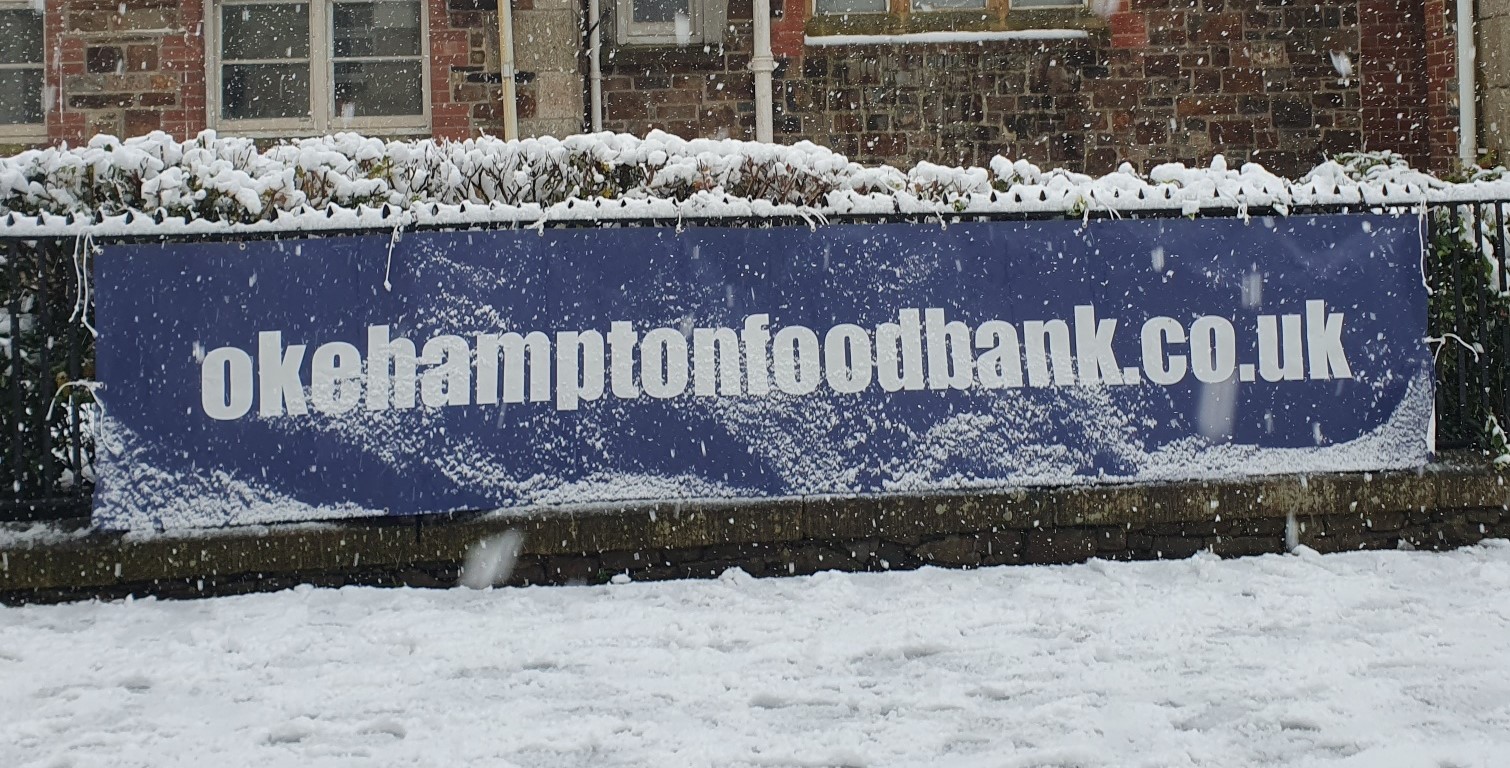
The Okehampton Food Bank, founded in 2008, operated out of the Baptist Church and a church-owned shop until this July. Since then, the food bank has continued its work from the Ockment Community Centre in Okehampton’s North Street – the hub of the local community.

The Okehampton Foodbank offers a warm, caring welcome and support to anyone in need. We should not be confused with the Okehampton Community Kitchen, a different organisation that is not affiliated with us.

Kind Words from the Trussell Trust.

The Trussell Trust, a leading food bank charity, recently acknowledged ‘the commitment and care,’ shown by all the volunteers at The Okehampton Food Bank and that we are, ‘ offering a food bank service with a supportive referral structure, and there is evidence that this is accessible to the community.  We also  ‘have approaches that enhance dignity for the local community in need.’

We are open from 10.00 to 12.00 on Thursdays. Accredited referral agencies connect families with our food assistance program. Once families receive a referral, they can come collect food from us. Principally we use Citizens Advice and Community Links. Citizens Advice are located in the Ockment Centre.  If you need their help be sure to book an appointment before going to avoid disappointment as they are swamped at the moment.
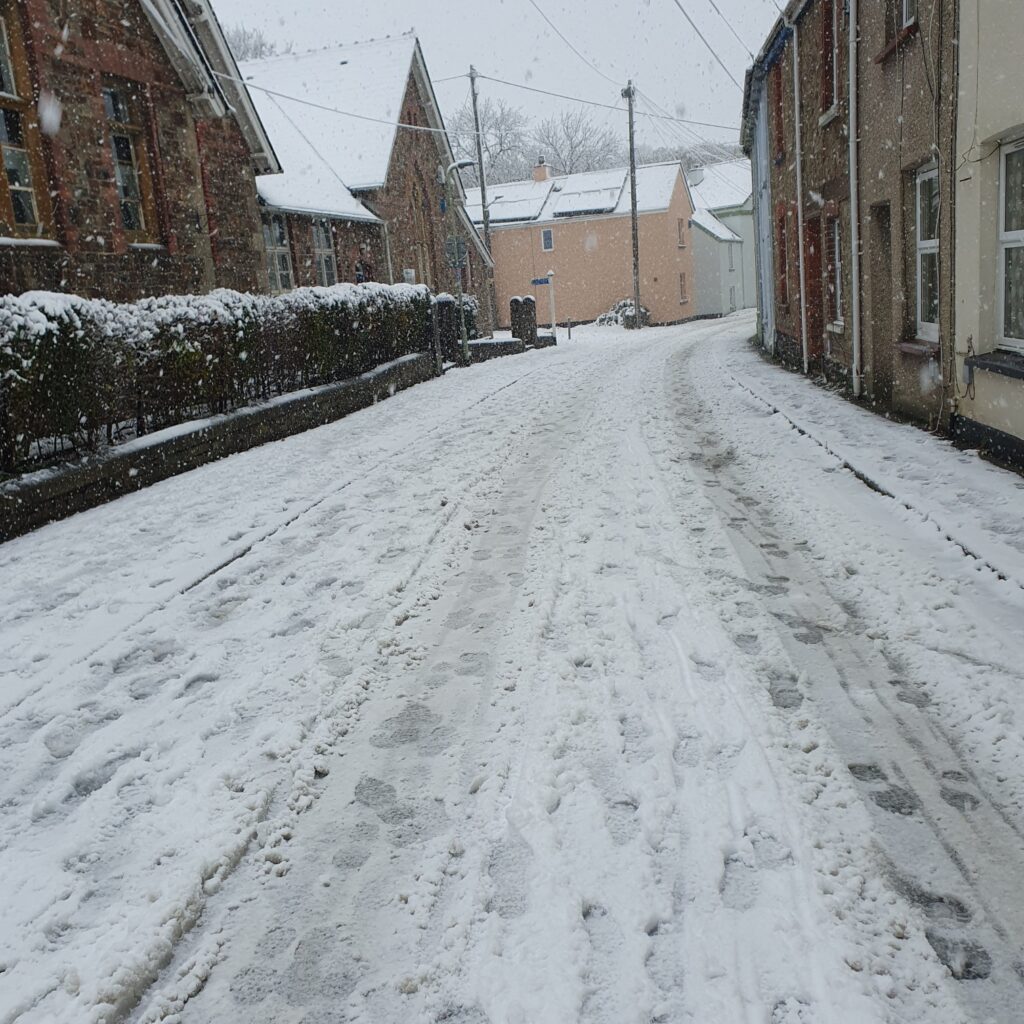
The Okehampton Food Bank demonstrated true community spirit this week, as they opened their doors on Thursday despite the challenging winter weather conditions.

Although the town was blanketed in a heavy layer of snow, Malcolm, a dedicated volunteer at the food bank, was adamant not to let the inclement weather deter them from fulfilling their mission to support local families in need.

Julie from the Ockment Community Centre, also trudged through heavy snow to ensure the food bank could access its vital supply of resources stored onsite.

Thanks to these efforts struggling households in Okehampton were able to receive the nourishing food and essential supplies they rely on, a true testament to the power of community in action.

No problems parking ay Lidl!

Even in the face of adversity posed by the unexpected snowstorm, the Okehampton Food Bank working with The Ockment Community Centre rose to the occasion, braving the elements to deliver hope and sustenance to those who needed it most, underlining the profound impact that selfless community service can have, especially during the most challenging of times.

North St

The term “food insecurity” is often used in the press and online, but what does it mean? To determine if a household requires emergency food assistance, they are considered food insecure and financially strained if their available resources fall more than 25% below the poverty threshold defined by the Social Metrics Commission.

This poverty line is calculated based on a family’s total financial means, including their income, housing costs, savings, and other essential expenses like childcare and debt payments. By accounting for these comprehensive factors, the poverty threshold accurately reflects the actual financial resources people have to cover their basic living costs. In practice, when determining who is in poverty, the Commission’s approach is to set a poverty line specific to the needs of each family. This means that each family’s available resources can be compared directly with their poverty line to determine whether they are in poverty.

The poverty line varies based on household size. For example, the threshold for a single person would differ from that of a couple or a couple with two children.

The poverty lines in 2021/22 show that a single childless person with less than £177 a week in available income would be considered to be in poverty. For a childless couple, the poverty threshold is £305 a week, while for a couple with two children, the threshold increases to £494 a week. Some groups across society are bearing the burden more than most.

Over half (53%) of those experiencing hunger, hardship and food insecurity live in households with a disabled family member. One-third (32%) of single-parent families face food insecurity and financial strain. Children under 5 years old have the highest risk of hunger and hardship at 24% compared to other age groups.

READ THE FULL REPORT HERE

Trussell, in collaboration with WPI Economics and Humankind Research, has initiated an innovative project that investigates the full extent of the UK’s emergency food requirements, the societal implications, and the potential effects of various solutions. This first report aims to provide solid evidence to support meaningful initiatives in addressing hunger and hardship across the country, working towards a future where food banks are no longer necessary.

A subsequent report is set to be released in Spring 2025, which will explore in greater detail the personal, social, and economic impacts of food insecurity and material deprivation. The findings will be based on comprehensive participatory research reflecting the daily experiences of those facing these issues, along with economic analysis that quantifies the cascading costs incurred by individuals, communities, and governments.

The report writers looked at four main areas…

  • How we define the full scale of need for emergency food, measured by our ‘hunger and hardship’
  • The scale of hunger and hardship across the UK, including historic and future trends
  • Who is most likely to face hunger and hardship
  • Impact assessments of a range of policies, including the fiscal cost and the impact on the scale of hunger and hardship.

Further summary to follow

  • 1
  • 2